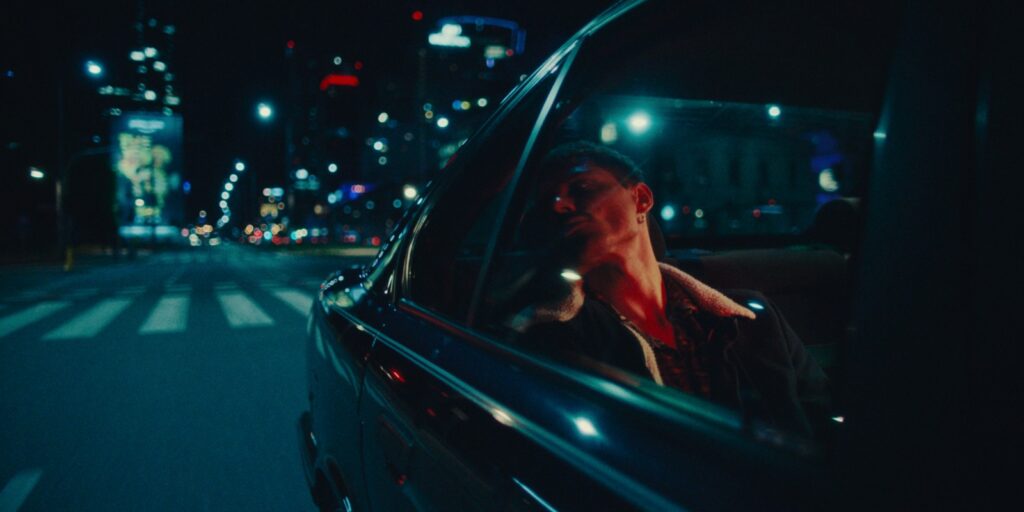
Therapy Berlin
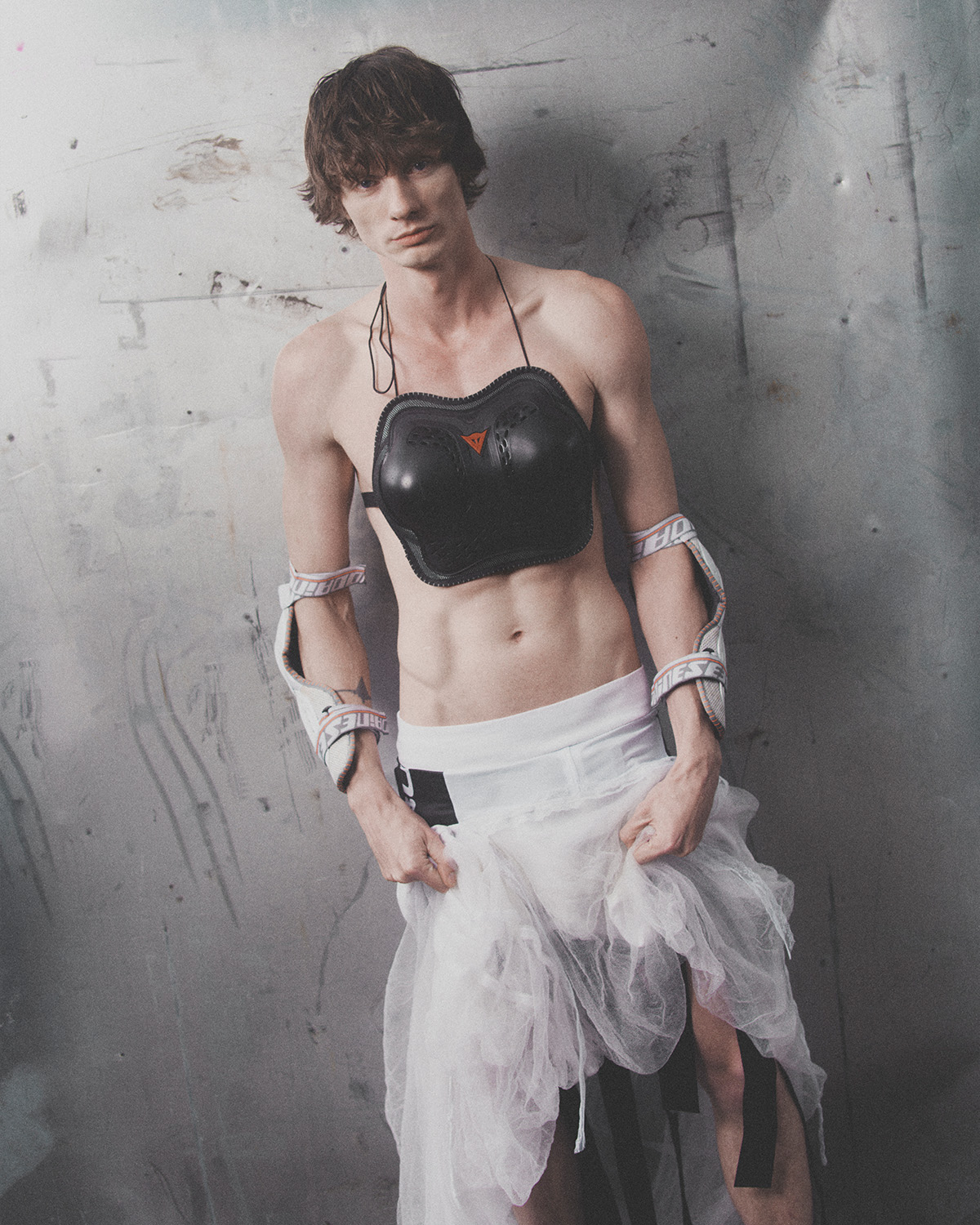
Photography Nicolai Sauer
Words Tom Veréb Czibolya
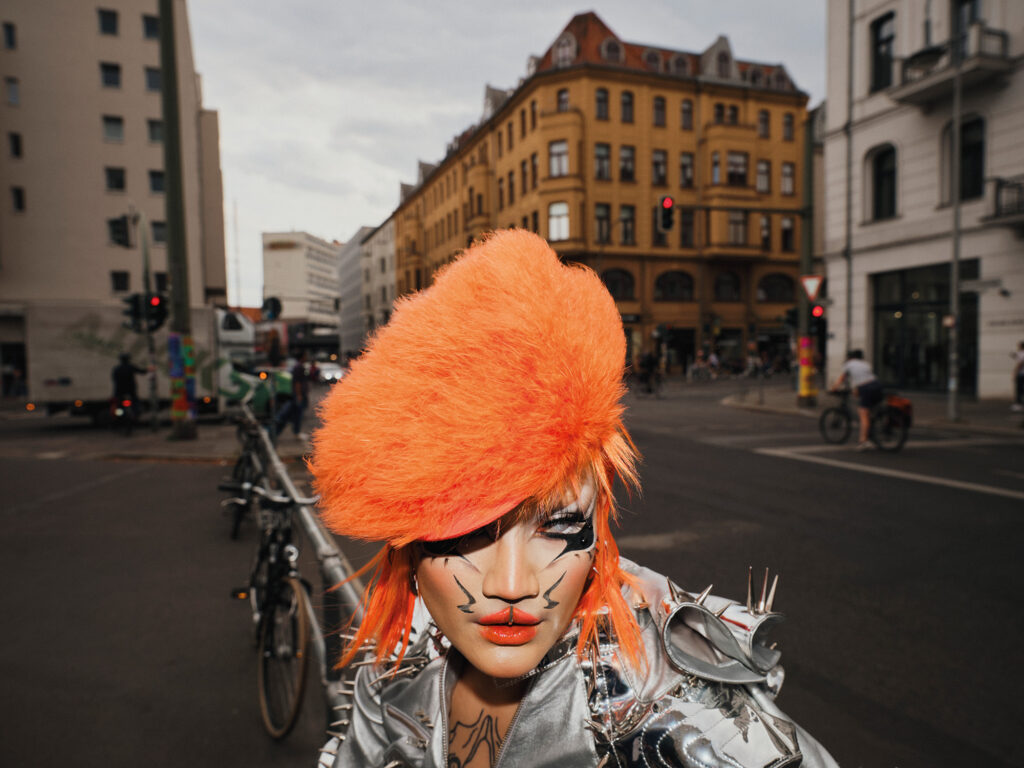
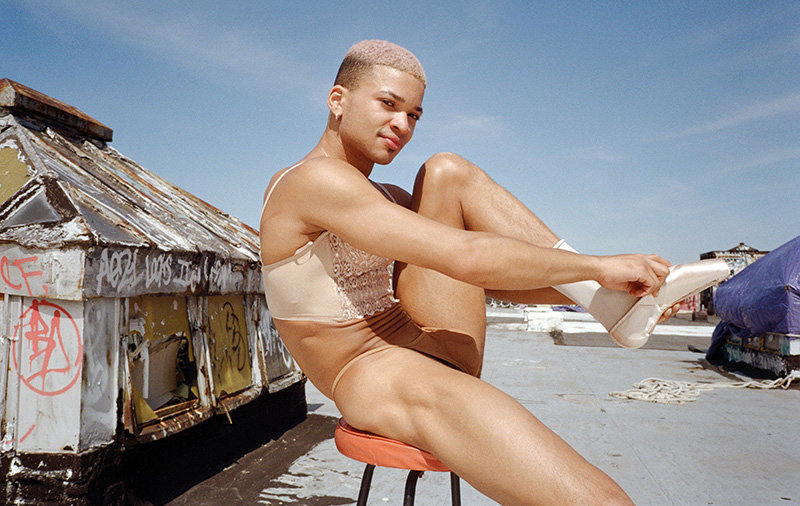
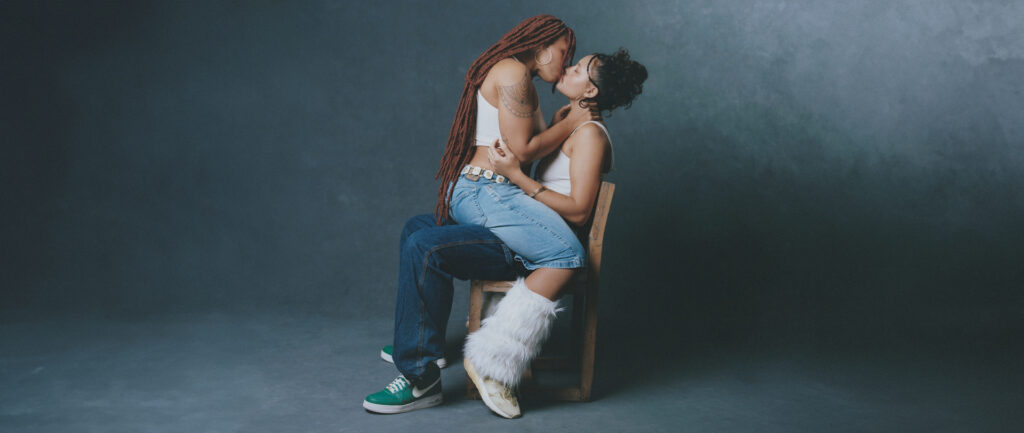
Leaving everything you know behind forces you to relearn yourself. For Angie Aguirre, this process began with a second-hand sewing machine, a pile of discarded clothes, and a need to make sense of a new life. What started in Berlin in 2012 as a personal creative outlet soon became Therapy, a shared practice with her sister Paula and a fashion label built around questioning everything. Working between Berlin and Argentina, the sisters transform discarded textiles into pieces somewhere between clothing and art, drawing on a family history of making, repairing and reusing. More than a decade on, Therapy remains less interested in trends than in the stories carried by materials, cities, bodies and the things we choose to throw away.
Photographer Nicolai Sauer, Producer Lovre Gracin, Talent Artur Hildebrandt, Casting Director Karma Di Sapio, Editor Tom Veréb Czibolya
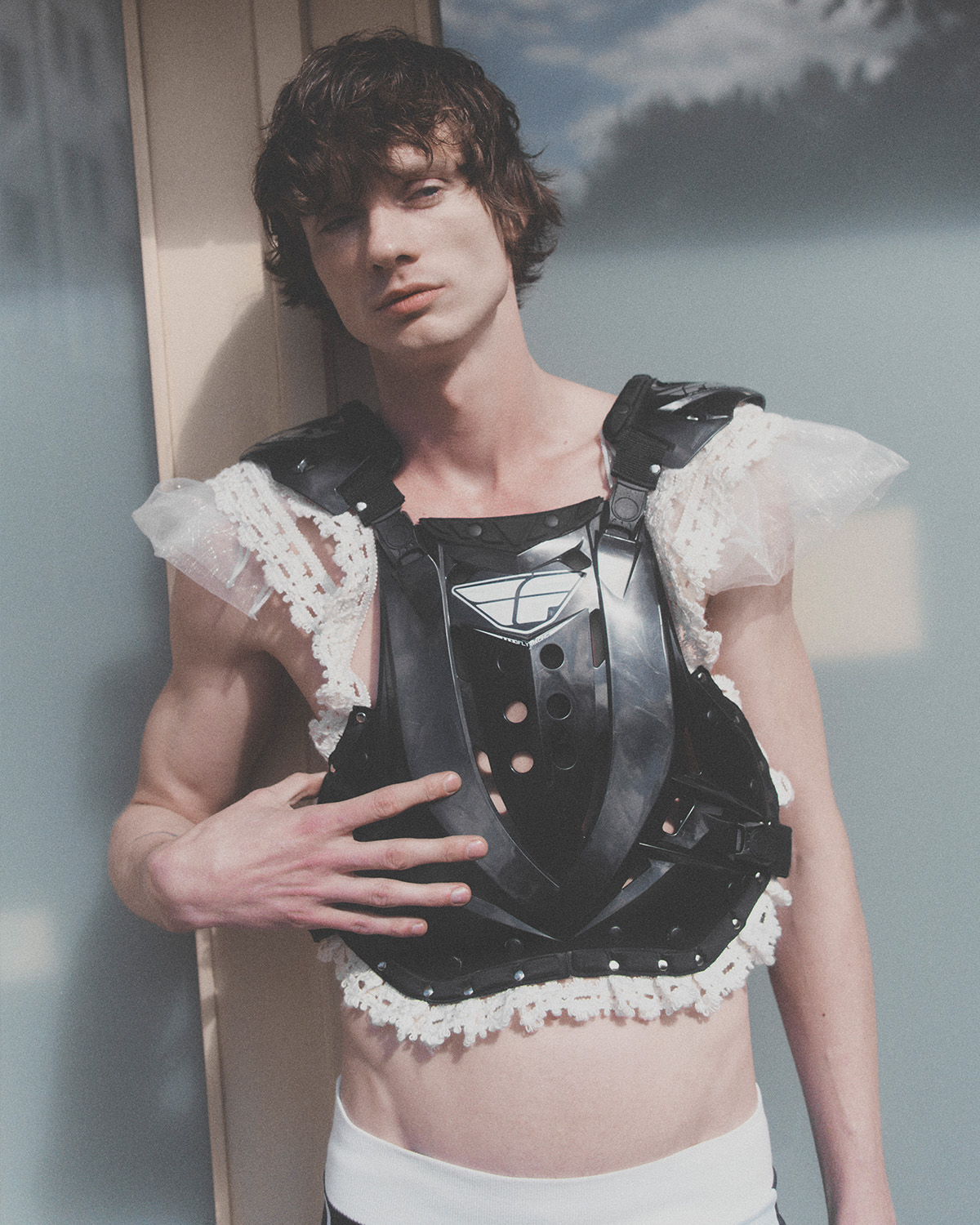
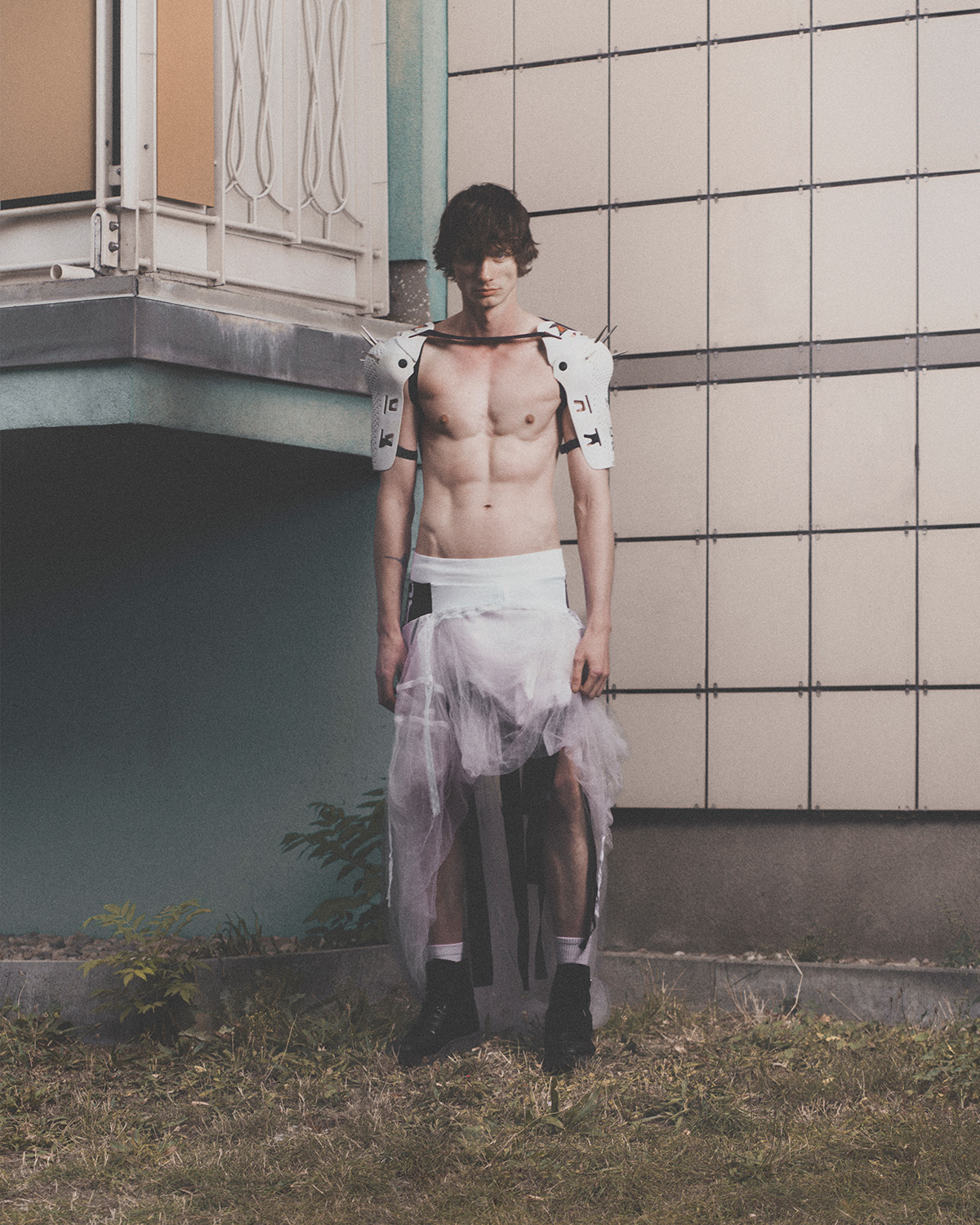
Therapy began in Berlin in 2012, initially as something of a personal creative therapy for you, before becoming a shared project between you and your sister, Paula. What was happening in your life at the time, and what made you turn to clothing and making things with your hands?
In 2004, I was 24 years old. I moved to Germany, embarking on a new adventure, a completely new life. For years, I did everything I could to learn, adapt, and understand how the world worked beyond my country, my culture, and my language. Being an ocean apart from my family in Argentina, the distance between us became almost unbearable. For me, this was a pain I had never experienced before. Back then, Skype wasn’t even a thing, and traveling back was simply too expensive for me.
After eight years, I had a moment of self-reflection. I remember looking in the mirror in my bedroom and seeing the room, all the furniture around me, but not myself.As an immigrant, I put immense effort into adapting to the country where I lived. It’s something that shapes your identity, and I felt like I had lost myself in the process. I had to ask myself who I was and why I was there. All of this was colliding with a personal revelation, a sense of liberation triggered by a breakup. I started questioning my own sexuality and realising I could be free from dogmas about what a woman should or should not do. The old patriarchal mindset. I embraced the freedom; I let go of guilt, something that’s very deeply rooted in Latin culture, even if I don’t come from a religious family. The understanding of it all struck me, and I had to find the right outlet to process it. I bought an old sewing machine off eBay and started doing little experiments with vintage clothes and accessories I came across on the streets and at flea markets. The way the pieces turned out made me so happy, and I already had the name in mind. Therapy was also a way to reconnect with my sister, Paula. Paula studied fashion, and each had her own accessories label, Libélula [Dragonfly] and Hello Kitsch.
We have a special connection, and I like to think that Therapy came to life so we could create together again. She designed our first logo, and we run Therapy together.
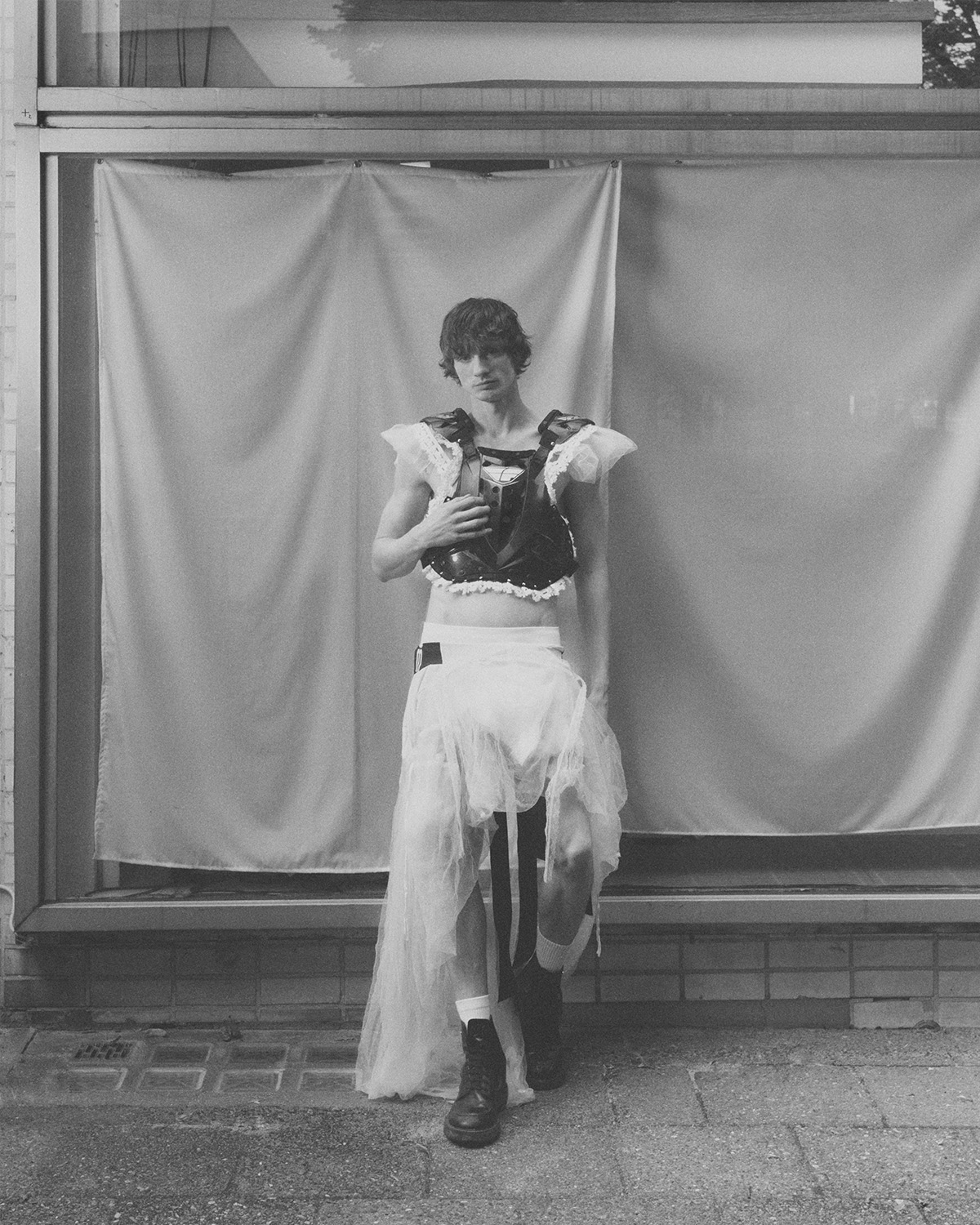
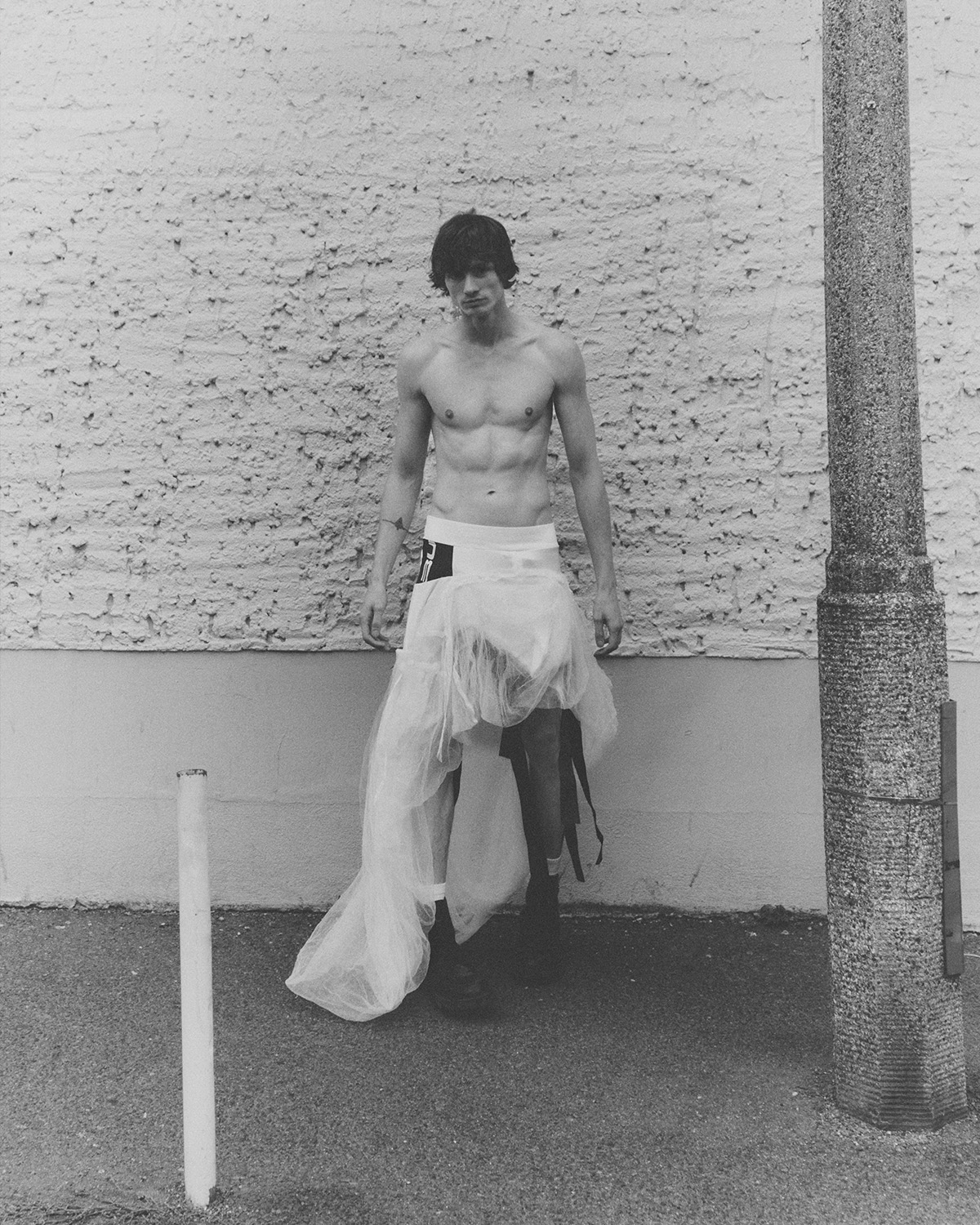
You grew up in Córdoba surrounded by a family tradition of sewing, repairing, and reusing. How much of what you do today is a conscious continuation of that heritage?
In South America, artisanship is in the air. Or at least that’s how it felt growing up and living there in the ’80s, ’90s, and early ’00s. I had always been doing things with my hands, whether working with clay or batik. I sewed and embroidered with our grandma and knitted with our mum. The first upcycler in the family was our grandma. She was the daughter of Spanish immigrants from Andalusia, Spain. Her mother made wedding dresses, while her father worked on the railroads. After he was killed in a locomotive accident, my great-grandma and grandma, who were seamstresses, supported their whole family from then on. My moving to Europe one hundred years later and becoming a seamstress and upcycler myself feels like a perfect circle closing. I feel her legacy is alive, and I pay tribute to those women in my life every day.
Paula and I both grew up with the premise that you have to be resourceful, that materials are expensive and valuable, and that things are always worth fixing, reusing, and repurposing again and again. It wasn’t something conscious, just what always felt natural to us. The same is true for Therapy. We never sat down to develop a concept or think about storytelling; there was no business plan either. It always felt much more like an extension of our own reality. Something you live, rather than analyze.
There is something very particular about Therapy’s relationship with Berlin: the city isn’t just where the brand is based, but seems to have shaped its attitude towards clothing, identity, gender and self-expression. What did Berlin give Therapy that perhaps couldn’t have happened somewhere else?
Berlin has been a place where I’ve asked myself some of the most important questions about identity and belonging – about who I am, who I love, and what I can make of what I have. As for Therapy, Berlin gave us the freedom, space, and lack of judgment we needed to start figuring ourselves out. Therapy is, in a way, a homage to this city, and we’re aware of that. But it’s one we pay in our own style and on our own terms. Berlin is all about blending things to create a unique mix of people, cultures, and styles. And so is Therapy.
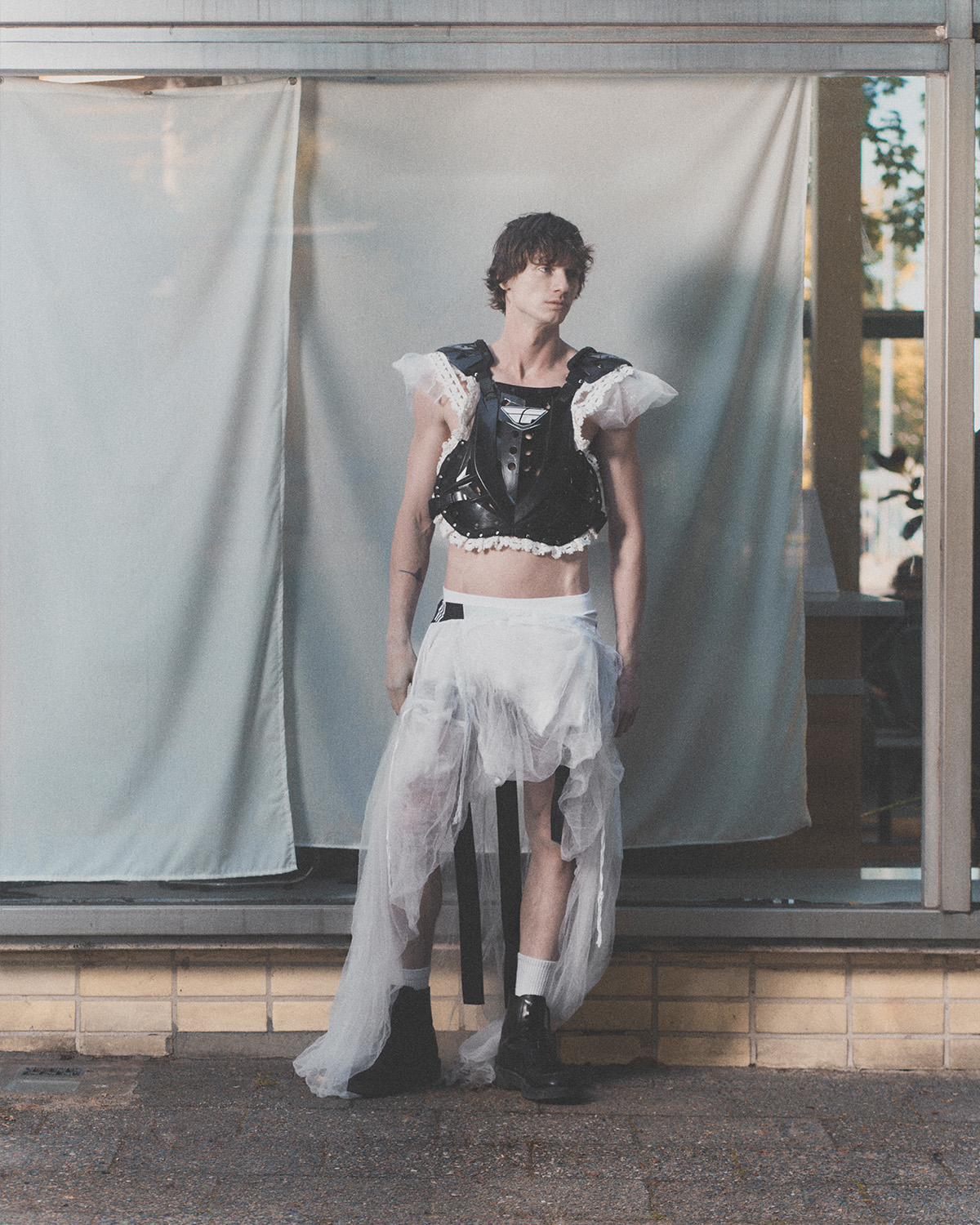
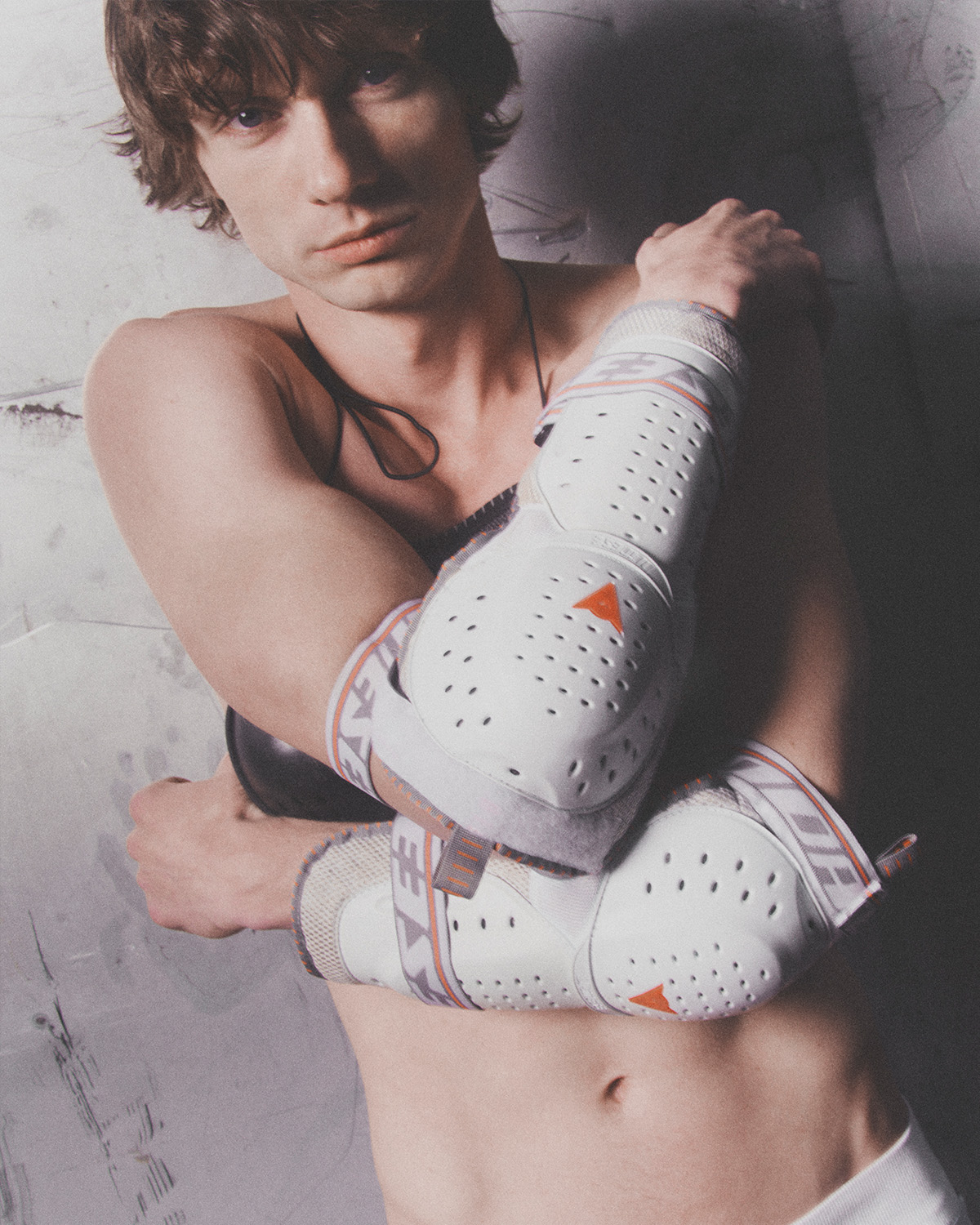
You were working with discarded and second-hand materials before circular fashion became a buzzword in the industry. What does circularity actually mean to you today, and where do you think the fashion industry is still getting it fundamentally wrong?
The idea of producing from rolls of new fabric is pointless to me because it can never fulfil my artistic vision. I think circular fashion goes against the very principles of the fashion business model – scaling and profitability – that the world is accustomed to.
The industry doubles down on a profit-above-people mindset while introducing isolated ideas to make itself look more sustainable. Fashion is very hierarchical, and those at the top have little interest in changing a status quo that benefits them so well. We need to acknowledge the problems first: waste, overproduction, and overconsumption. Only then can we create something we’re proud of, something others can cherish and value enough to allow us, economically, to continue with our practice. There is a bit of masochism in this, but also altruism and a community mindset. I’m identifying a social issue and proposing ideas for how to address it.
You describe Therapy as fashion without seasons or trends, while also using clothing to question beauty standards, gender binaries, and the way bodies are represented. How important is the political and social dimension of a garment to you, and can fashion ever really be separated from those questions?
That’s the point. It can’t be separated. There is no way to think of fashion as an adornment, empty of meaning and commentary. Empty of culture. If you think about fashion as something neutral or indifferent, you’re not questioning the status quo – and that’s already political. That’s why our slogan is QUESTION EVERYTHING. It is an invitation for others not to just accept things as they are. Starting with something as domestic as clothes is a good practice. Once you internalize the practice, you can take the questioning to other areas.
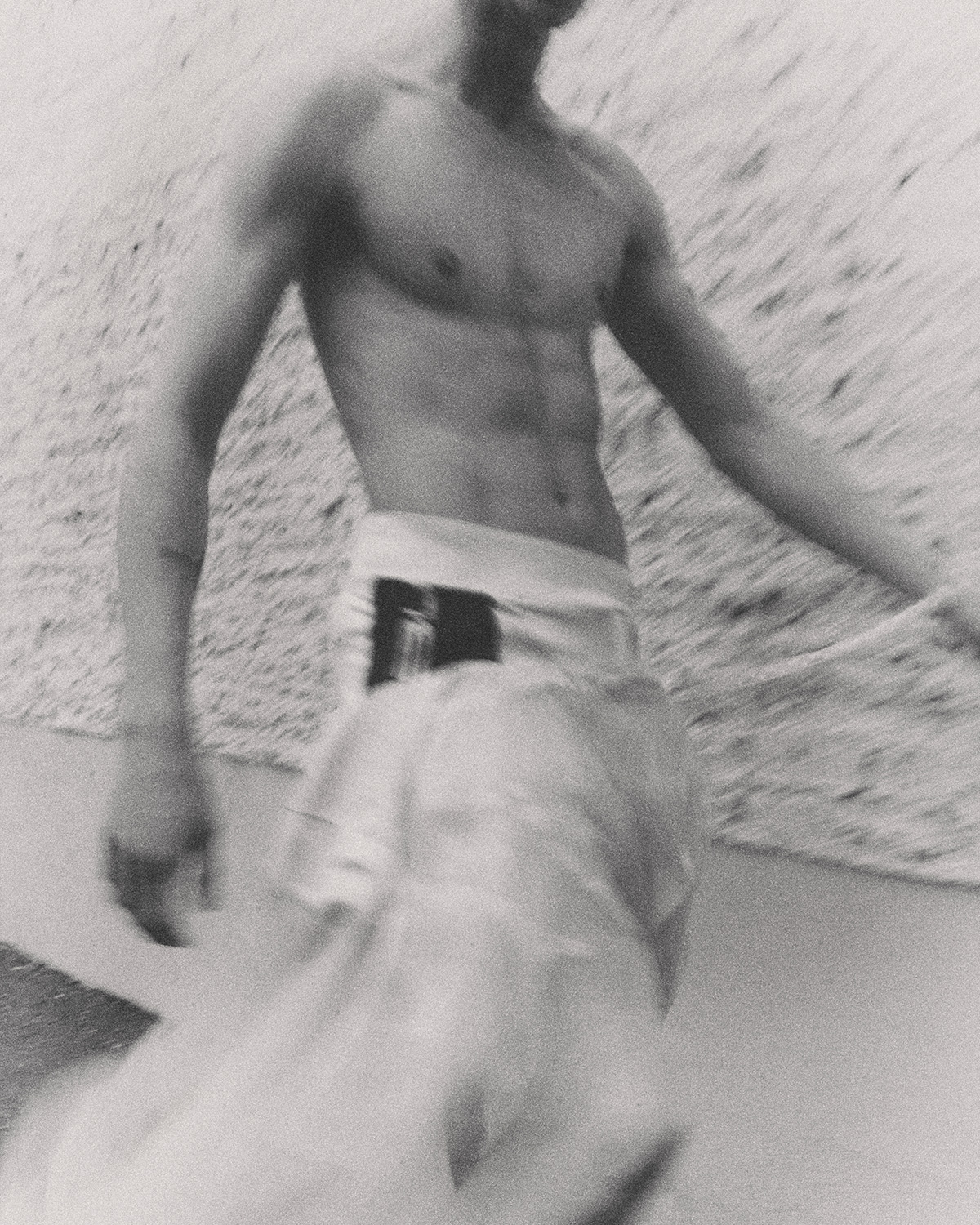
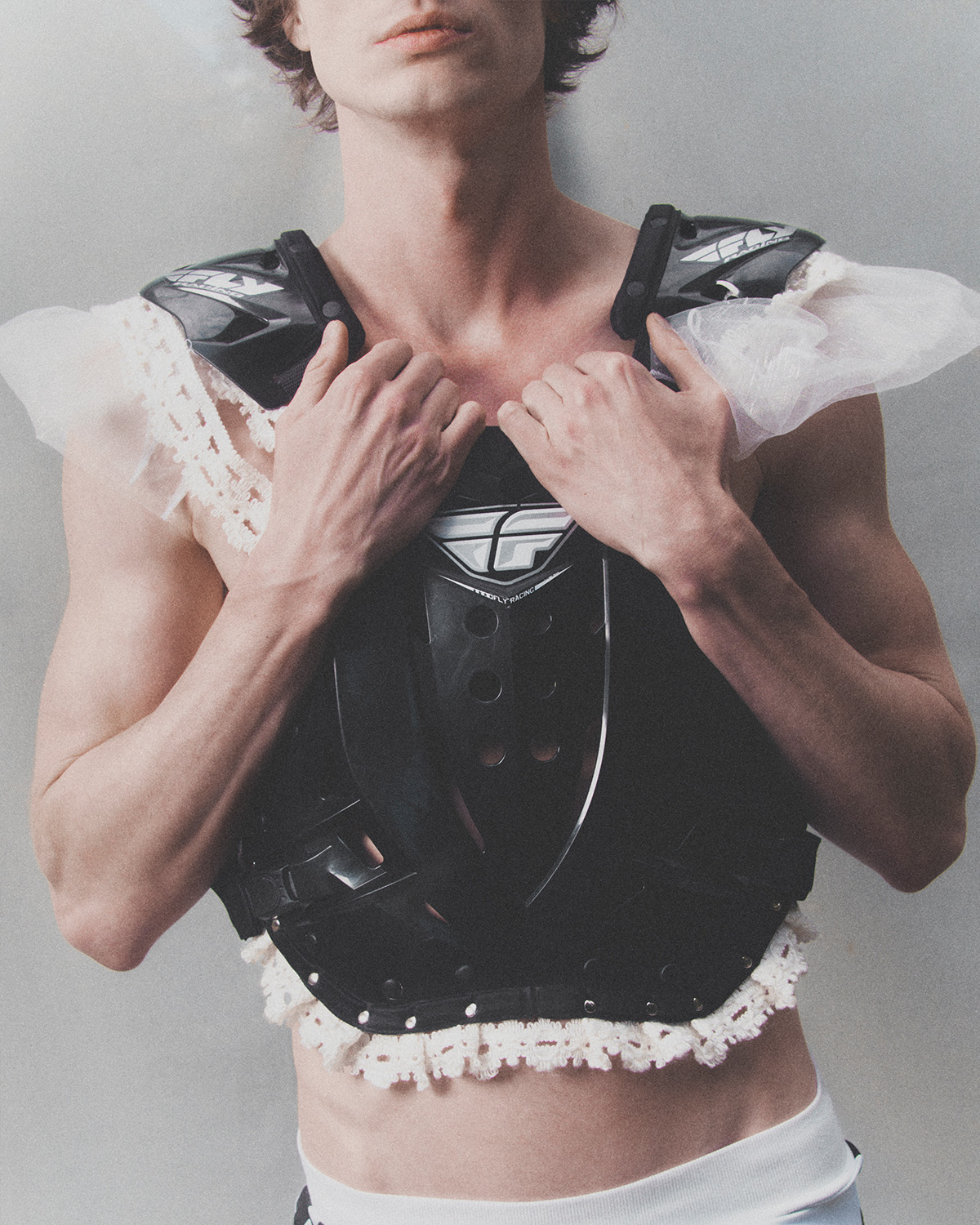
Around 90% of your raw materials are second-hand, vintage, or discarded, and every piece has to respond to whatever material you can find. How does that change the traditional relationship between designer and material?
The materials we work with demand attention and sensitivity to understand their previous function or malfunction – why they were discarded, what they might have meant to their previous owner, or, in the case of pre-consumer discards, why the producer didn’t use them in the end. Wasted textiles carry so much meaning; the whole process becomes an anthropological study. You can tell a lot about people, their way of life, and their views through what they dispose of and how they dispose of it. An interesting method is to reimagine a piece for a function that is the polar opposite of its original purpose. Sometimes, time is key. Much magic happens in the sorting and reorganising over time; it’s a bonding process. In my family, even unused clothes were stored away. As a kid, I found my mother’s hippie skirts from the ’70s, and they were gold to me. It’s just something that doesn’t happen anymore, now that the throwaway mentality is so strongly embraced.
Can you take us through the journey of a typical Therapy piece – from finding a discarded garment or textile to the moment the finished piece leaves your atelier? What happens in between, and how much of the process is intuition versus planning?
In Argentina, people don’t get rid of clothes so easily, and even if they do, they definitely won’t leave them on the streets the way it’s normal in Berlin. Here, materials seem to find us. There is always something left on the street, or we can easily buy second-hand pieces at flea markets and in different shops.
Sometimes it’s the other way around: we fall in love with a certain idea and try to source the right kind of materials for it. It’s about balancing aesthetics with function. I like pieces that are adjustable, multifunctional, or hybrids between clothing and accessories the most. But Therapy is an ever-evolving language for discarded matter waiting to be exorcised and brought back to life.
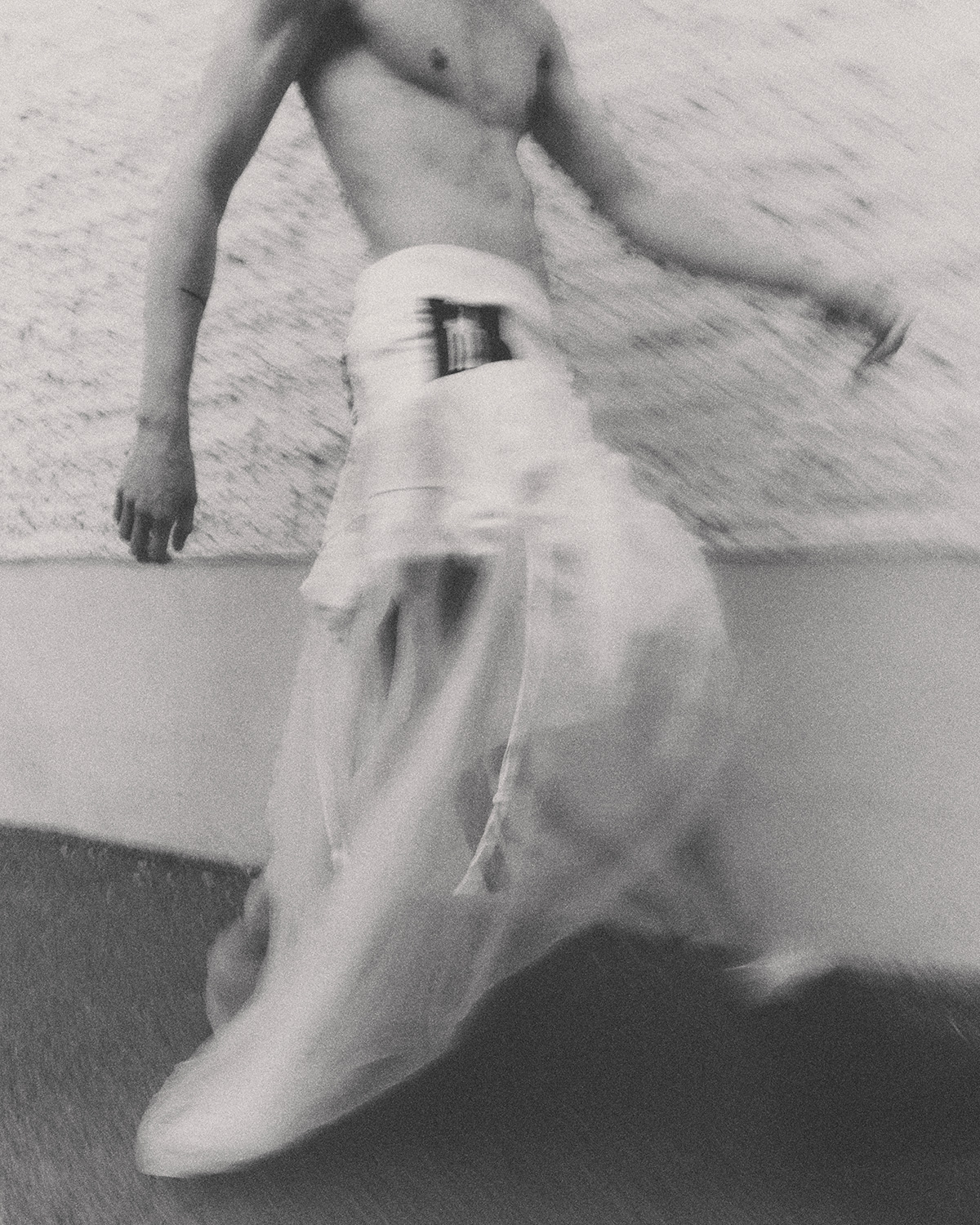
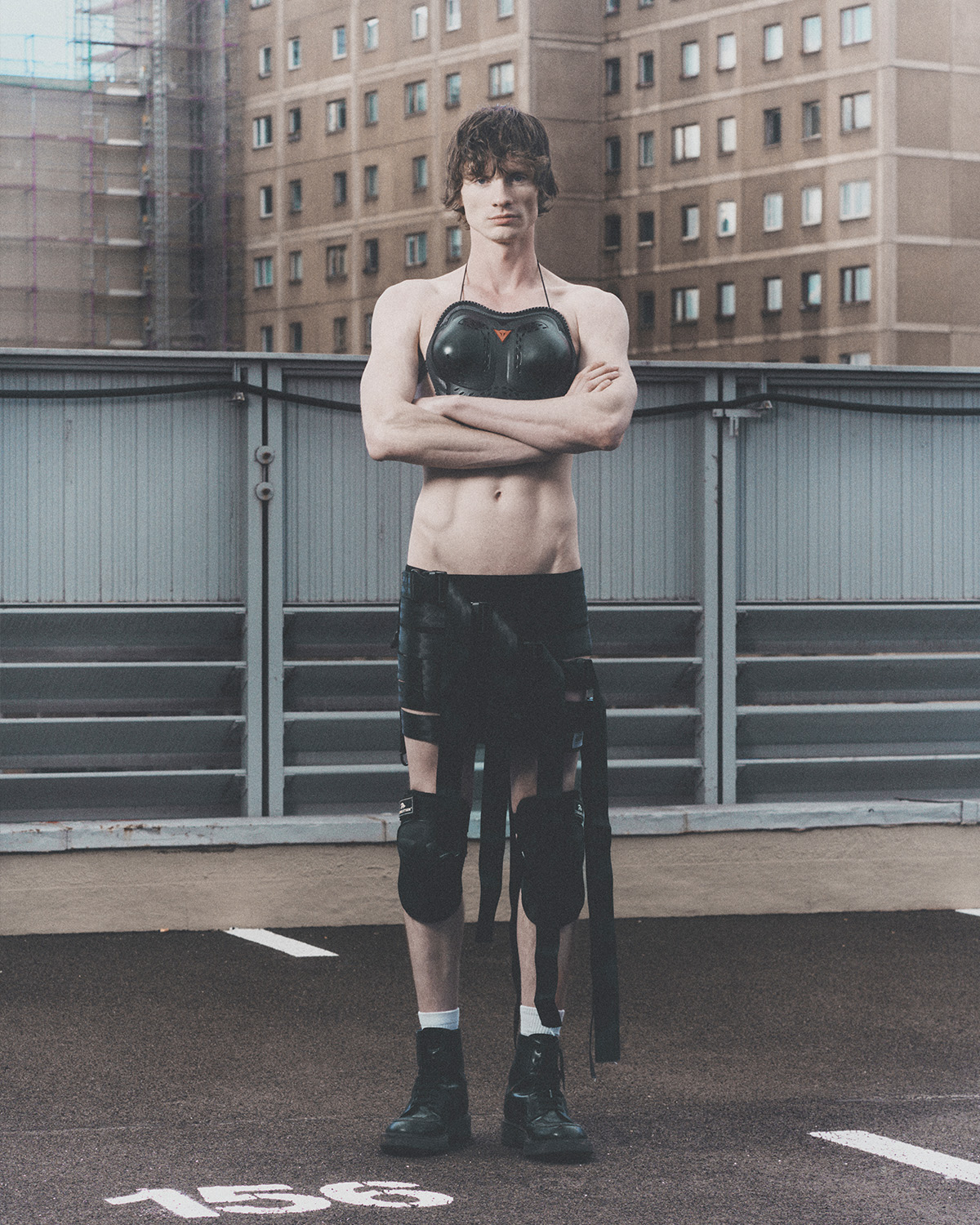
Do you think the current sustainability conversation has sometimes made something as simple as upcycling unnecessarily complicated?
This is a topic people in Europe tend to overthink. Regulations are needed now because most big corporations are using every grey area to destroy nature and community for the profit of a few. Let’s not forget most politicians, always thinking about getting their slice of that. It is mind-blowing that many people still think that is ok.
In the Global North, people seem to forget that our planet has limits and that everything is connected; care for resources needs to be reinforced legally by regulating corporations, and culturally, with education. Even in Europe, it wasn’t long ago that people were making their own clothes and cherishing them. Most kids today have never seen a sewing machine. Having a sewing kit at home is now a rarity. For over half a century, we have been indoctrinated to think buying more equals having a better life. I think it’s time to reevaluate that.
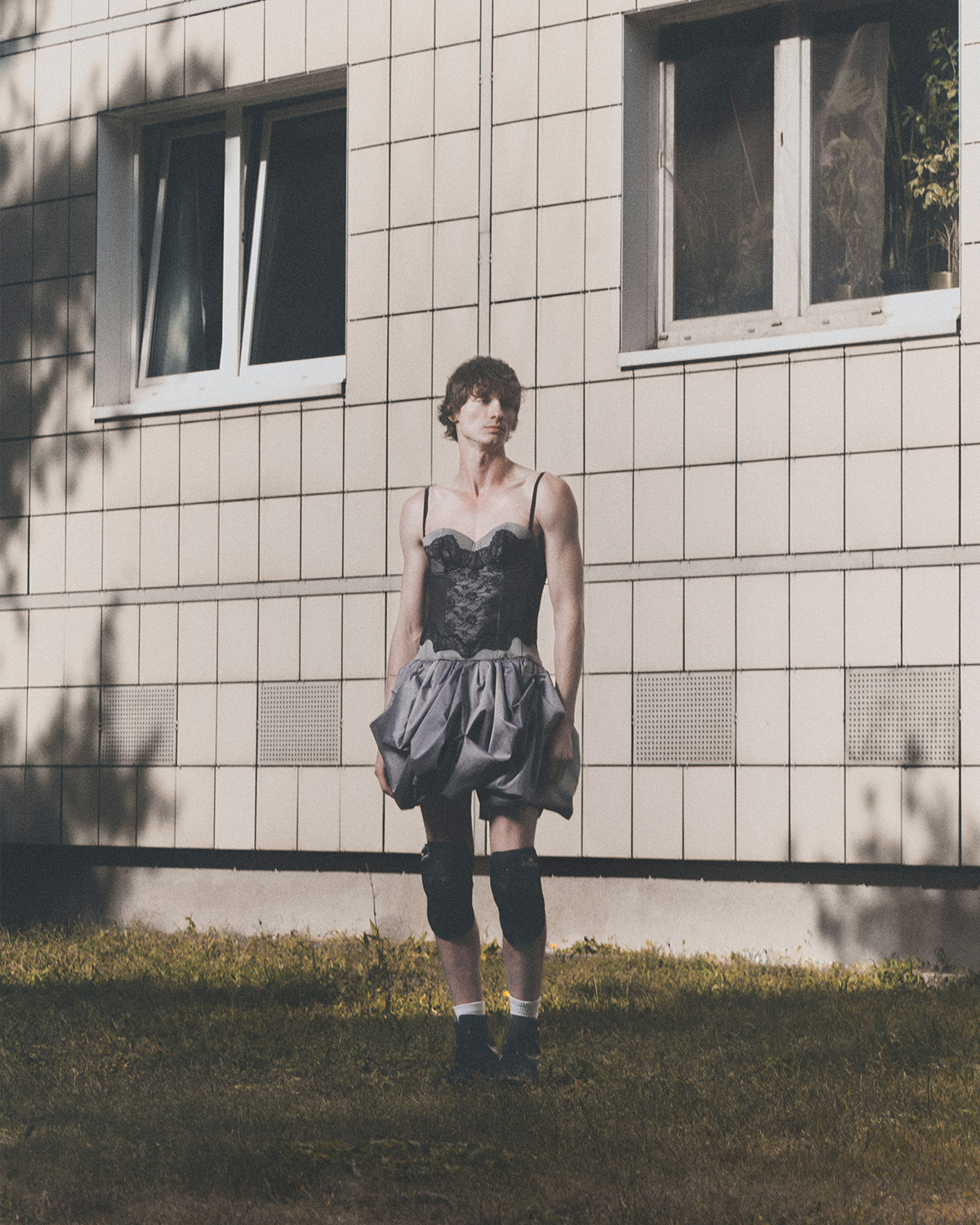
After more than a decade of working between Berlin and Argentina, what has Therapy taught you about each other, about fashion, and about the possibility of building a different kind of creative business?
Therapy remains something deeply personal. It was brought to life as a space of belonging, a home with open doors for others. We have met so many people, and it has taken us to places we never thought possible. It’s always very rewarding to see our work in new contexts. Last March, we presented a retrospective installation bringing together our ten collections, which eventually led us to exhibit in art galleries and to one of our designs becoming part of the permanent collection of the Museum of Modern Art in Buenos Aires. Our latest exhibition, Dressing Worlds, is all about disruptive fashion and has just opened in Argentina.
Since 2024, we have also been researching and creating in the field of textile art and non-wearable textiles, focusing on discarded urban textiles. This is a path we’re incredibly excited about because it opens up new possibilities for collaborations and experimentation. It has allowed us to go out, to go beyond our fears, always searching for new playgrounds, new games, and new people to play them with. I hope that if Therapy could fix something in us, then it might be able to do the same for others, for society as a whole.
Read more Related Posts

Check out more categories